

Routes, Dog-Friendly Places and Friends Near You
It is Saturday, your dog is already waiting by the door, and you are asking yourself the same question again: “Where should we go today?” Finding dog-friendly places near you, a pleasant route, the right park, or a compatible playmate sounds simple—until the information is scattered and fails to answer what really matters. This guide brings everything into one practical method, helping you turn an improvised search into a plan designed around your dog's wellbeing.
Your dog does not need the perfect plan. They need a city to discover.
How to Find Dog-Friendly Places Near You
The best place is not necessarily the most popular or the closest. It is the one that suits the moment, the weather, your dog's energy, and their needs. Begin by dividing your search into three categories: parks, walking routes, and dog-friendly establishments.
1. Look for Parks With Useful Information, Not Just an Address
When you search for “dog parks near me”, check whether the listing answers these questions:
- Is the area securely fenced, and do the gates close properly?
- Is there water, shade, seating, lighting, or waste-bag access?
- Are there separate areas for small and large dogs?
- What is the atmosphere like right now: calm, lively, or full of energetic play?
- Are there recent community comments or photographs?
- Are the access rules and opening times still current?
A location may be accurate and still not be the right choice for your dog that day. A sociable puppy, an older dog, and a shy dog may need very different experiences in the same park.
2. Confirm That a Place Is Genuinely Dog-Friendly
A visible terrace does not always mean dogs are allowed inside, and a dog-friendly policy may vary by area, time, or capacity. Before travelling:
- Review the establishment's latest information.
- Check whether dogs are allowed indoors, only on the terrace, or in specific areas.
- Ask whether there are limits related to size or number of dogs.
- Consider whether there is water, enough space, and an easy exit.
- If anything is unclear, call or message the business directly.
Shops, cafés, accommodation, veterinary clinics, groomers, and training centres are all part of local life with a dog. The dog-friendly label is only the beginning; the real experience depends on whether the space is safe and comfortable for everyone.
A place may allow dogs. A truly dog-friendly place also thinks about them.
Where to Find Dog Walking Routes
A good route combines safety, enrichment, and the right level of difficulty. You do not need to leave the city: a route through quiet streets, green spaces, and a park can become a new experience when you change the pace and allow time to explore.
The Six-Question Route Check
Before you leave, consider:
- Distance. Is it appropriate for your dog's age, physical condition, and energy?
- Surface. Is there hot tarmac, gravel, mud, or terrain that may be uncomfortable?
- Shade and water. Can you stop, offer water, and avoid the hottest part of the day?
- Traffic and noise. Is the route suitable for a sensitive or reactive dog?
- Local rules. Where must your dog remain on a lead, and where are dogs allowed?
- Return plan. Can you shorten the route if your dog gets tired or the weather changes?
On a new route, begin with a shorter version. Watch your dog's pace, breathing, willingness to continue, and response to the environment. The recorded distance is one piece of data; body language provides the context that completes the decision.
The best route is not always the longest one. It is the one your dog enjoys.
Save the Walks That Work
Recording distance, duration, pace, and route helps you identify patterns: which walks your dog enjoys, when the area is quieter, and how much activity they are getting. In SNIFR, every walk can be saved in your dog's history so you can revisit it and observe their activity over time.
See how walk tracking works in SNIFR.
How to Find Compatible Playmates for Your Dog
Living nearby makes meeting easier, but proximity does not guarantee compatibility. When looking for friends for your dog, consider at least four dimensions:
- Energy. A dog who plays intensely may overwhelm one who prefers short interactions.
- Size and play style. These matter particularly when play involves running, jumping, or physical contact.
- Temperament. Sociable, shy, calm, or adventurous offers useful context before the first encounter.
- Preferences and boundaries. Knowing what each dog enjoys and avoids helps prepare a respectful experience.
SNIFR uses profile information—energy, size, and temperament—to suggest compatible dogs nearby. When the interest is mutual, the chat opens and the humans decide whether they want to arrange a walk.
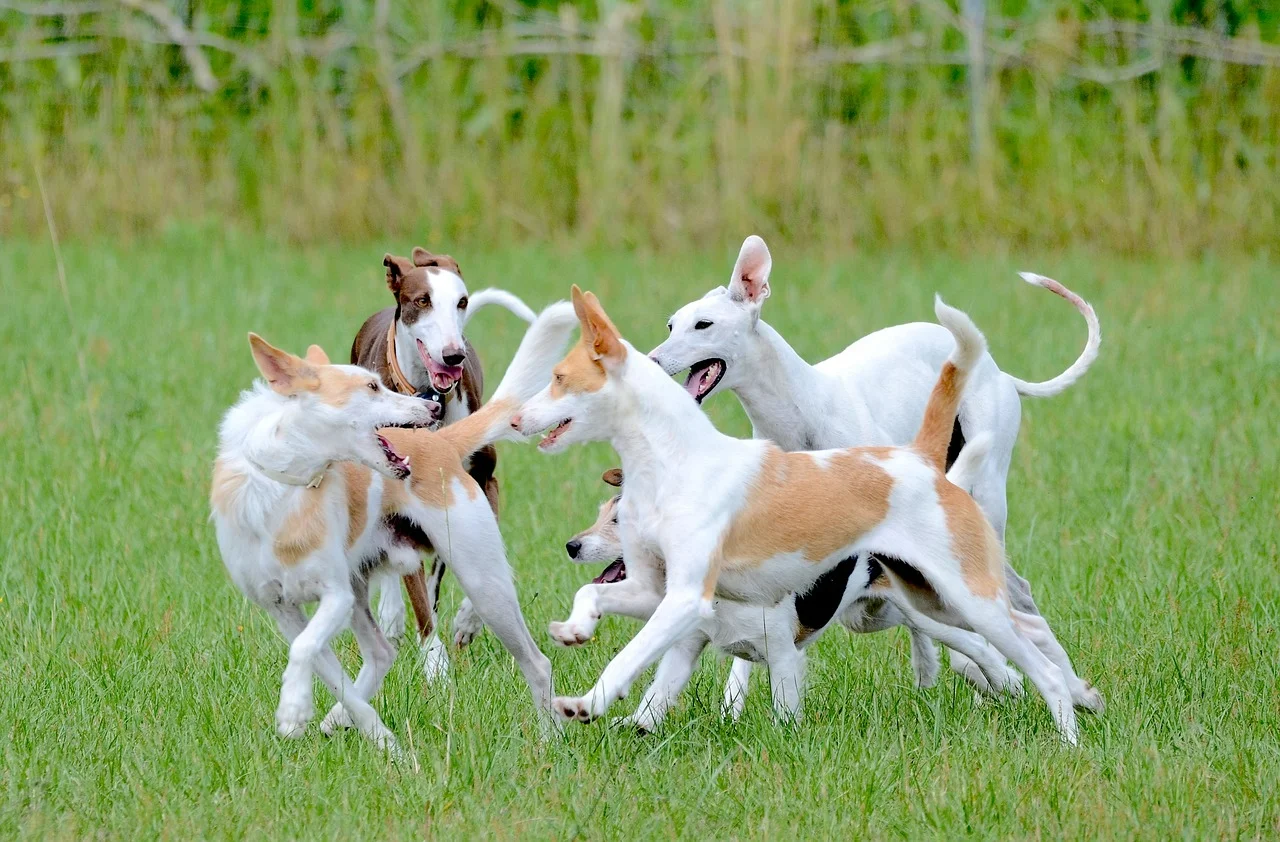
Dogs do not ask who you are. They ask whether you want to walk.
How to Prepare for the First Walk Together
The first meeting should be gradual and supervised:
- Choose a spacious, neutral public place.
- Begin by walking in parallel with some distance between the dogs.
- Avoid forcing face-to-face greetings or prolonged contact.
- Watch whether both dogs remain relaxed and can move away freely.
- Pause calmly if you notice stiffness, fear, persistent pressure, or overexcitement.
- If either dog has specific behavioural needs, seek professional guidance.
SNIFR facilitates the introduction. Safety, pace, and the final decision always remain with the people responsible for the dogs.
Things to Do With Your Dog This Weekend
Not every plan needs to be elaborate. These ideas can be adapted to the time available and your dog's personality:
- Exploration route. Walk through a different neighbourhood and include a calm stop.
- A new park. Visit a space that has not yet appeared in your history.
- Social walk. Arrange an outing with a compatible dog.
- Dog-friendly plan. Combine a walk with a café, shop, or terrace that welcomes dogs.
- Activity mission. Set a distance, build a streak, or discover several parks.
- Pack meetup. Bring friends and their dogs together for a shared walk.
- Dog event. Look for an educational, charitable, sporting, or adoption activity.
- Scent walk. Slow down and let your dog explore without turning the outing into a race.
The best plan is not the one that fills the entire day. It is the one that leaves your dog enriched, settled, and eager to do it again.
Every neighbourhood hides a walk you have not discovered yet.
Where to Find Dog Events and Meetups
To find activities, check sources with current information: local authority calendars, associations, shelters, canine centres, local businesses, and walking communities. Before attending, confirm:
- The exact date, time, and location.
- Whether registration is required or capacity is limited.
- The type of activity and expected energy level.
- Entry, vaccination, lead, or insurance requirements.
- Availability of water, shade, and rest areas.
- Whether you can leave easily if your dog becomes uncomfortable.
In SNIFR, packs bring together people who know one another and their dogs, while meetups turn that connection into group walking events that appear on the pack's map.
How to Meet Other Dog People Without Forcing a Connection
Dogs break the ice, but a healthy community is built on respect. Begin with a simple question about the dog, listen before approaching, and accept “not today” without taking it personally.
While preparing SNIFR's first local activations in Terrassa and Barcelona, one question keeps coming up: “How do I know whether there will be suitable dogs for mine?” It reminds us that a useful community is not created simply by gathering people. It needs context, compatibility, and a clear reason to meet.
A good first connection may begin like this:
- Share your dog's name, age, and energy level.
- Explain clearly whether they need space or enjoy playing.
- Suggest a short walk before a longer meetup.
- Choose a public place that is easy to leave.
- Keep the conversation within boundaries that both people accept.
The walk is the network: every respectful encounter strengthens neighbourhood life.
What Types of Apps Exist for People With Dogs?
Digital tools for living with a dog usually address different needs. You can find:
- Maps and directories, useful for locating addresses and spaces.
- Activity trackers, focused on distance, time, or routes.
- Professional services, designed to help people find care or specialist support.
- Communities, focused on sharing information or meeting people.
- Integrated experiences, connecting profiles, walks, local discovery, and community.
Before downloading an app, check what problem it solves, how it protects location data, which features are free, whether its local information is current, and whether the product helps you do something away from the screen.
Why a General Map Is Not Always Enough
A map can tell you where a place is. To make a good decision with your dog, you also need to know what it is like, what it offers, and what is happening there.
Context makes the difference:
- A green point does not confirm that a park is fenced.
- An address does not tell you whether there is water or shade.
- An old review does not describe today's atmosphere.
- Distance does not explain whether compatible playmates will be there.
- Finding a place does not automatically save the story of the walk.
This is why information from people who genuinely walk in the area is so valuable. When users add parks, vote on facilities, share photographs, or describe the atmosphere, the map becomes a living tool.
Fewer separate searches. More shared life.
How SNIFR Brings Everything Into One Experience
SNIFR is built around an everyday activity: the walk. From your dog's profile, you can move into local discovery, track a route, view parks, find compatible companions, and arrange a meeting.
Within the experience, you can:
- Create profiles for one or several dogs.
- Track walks with distance, duration, pace, and route.
- View parks and contribute information about facilities and atmosphere.
- Discover nearby dogs based on compatibility.
- Match, chat, and arrange shared walks.
- Create packs and meetups.
- Complete missions, streaks, and badges.
- Discover participating businesses and redeem rewards using QR codes.
- Share your dog's care with co-humans.
The essential features—profiles, parks, walks, matches, and missions—are free, and registration does not require a payment card. According to official information reviewed on 25 August 2026, SNIFR is available for Android, while the iOS version can be reserved. Availability may change, so always check the official SNIFR download page.
SNIFR does not ask you to see more of the city through a screen. It invites you to go out and experience it with your dog.
Frequently Asked Questions
How Do I Find a Dog Park Near Me?
Search by location, but also review fencing, water, shade, cleanliness, separate size areas, atmosphere, and recent community contributions. In SNIFR, park information grows through votes, photographs, and comments from the community.
How Do I Know Whether a Café or Business Allows Dogs?
Check the establishment's latest policy and confirm whether access is indoors, outdoors, or limited to certain areas. If the information is unclear, contact the business directly before visiting.
How Can I Find Compatible Friends for My Dog?
Do not focus on distance alone. Compare energy, size, temperament, play style, and boundaries. SNIFR uses this profile information to provide more contextual suggestions.
Can I Find Routes for Walking My Dog?
You can combine parks, quiet streets, and green areas to create suitable routes and then track the walks that work best. Always review distance, surface, shade, water, traffic, and local rules.
Where Can I Find Dog Events?
Check local calendars, shelters, associations, professionals, and businesses. SNIFR packs and meetups let your group organise shared walks and see them on the map.
Is SNIFR Free?
Yes. Registration and the essential features are free and do not require a payment card. SNIFR is preparing an optional Pro plan with additional features.
Does SNIFR Share My Exact Location?
Not publicly. SNIFR states that it uses approximate areas for discovery and allows users to control their visibility in the settings.
Conclusion: Discover What Is Near You
Finding dog-friendly places near you is not about collecting addresses. It is about choosing routes, parks, places, events, and connections that suit your dog and the kind of day you want to enjoy together.
When information has context, the walk stops feeling like a repeated obligation and becomes an opportunity: explore a neighbourhood, meet a compatible companion, support a local business, or save a new story in your dog's profile.
Open SNIFR and discover everything you can do with your dog near you.