
"SNIFR had been selected to participate as an ALPHA Startup at Web Summit Lisbon 2026".
In theory, it was exactly the kind of email every founder dreams of receiving.
I looked at it and thought:
What do we do now?
Nobody tells you how to get to Lisbon when you do not have the budget, how to stand in front of investors when your MVP is only six weeks old, or how to prepare a startup for one of the world’s biggest technology events when the entire team could fit around a small table.
And yes: at first, he thought I had fallen into a sales funnel.
This story does not begin with a startup that had everything figured out.
It begins with two founders, low commitment from the people we had contacted, too many questions, and an application I submitted without telling Dani.
“Nobody tells you what happens after ‘Congratulations.’”
— Yngrid Salazar, Co-founder of SNIFR
Who Told Us to Apply With a Six-Week-Old Startup?
SNIFR was stuck.
We had built an MVP in just six weeks and started our first Alpha tests. The product existed, but commitment from the people we had contacted was low.
We needed to test, learn, and attract users, but every step seemed to lead us back to the same conclusion:
“What we need now is a budget. Money we do not have.”
The most dangerous thing was not having little money. It was sitting still and letting other people decide whether SNIFR deserved to continue.
Dani and I did not want that.
While he managed to secure a meeting with a major brand, I kept looking for opportunities. I did not have a secret map or an extraordinary contact list.
I was looking for doors.
One of them was Web Summit Lisbon 2026.
I opened the official website, read the requirements, and started filling out the application.
First attempt: I left it unfinished.
Second attempt: I tried again, but everything was in English. I do not speak English, and doing it all from my phone felt like a small form of torture. I had to translate every question, understand what they wanted, prepare my answer, and then write it in English.
So I told myself:
“I need to do this properly from my laptop.”
The third time was the charm.
As I completed the application, I discovered something I had not expected: although SNIFR was very small and very new, we already had many of the things Web Summit Lisbon 2026 was asking about.
I did not submit the application because I was certain we would be selected. I submitted it because I think in numbers and probabilities.
“If I need one hundred noes to get one yes, I will go looking for those one hundred noes.”
— Yngrid Salazar
I remember thinking:
Who would want a startup this small?
The answer arrived as an invitation to an interview.
There was only one small problem: Dani had no idea I had applied.

How Do You Tell Your Co-founder You Have an Interview in 48 Hours?
I told him just two days before the call.
Dani thought I had signed up for a sales funnel and that someone was going to try to sell us something.
We already had too many things going on to waste time on another call.
I replied:
“Dani, I always try to take a lesson from everything. If they are salespeople, let’s learn from them. You can always, always learn something.”
So we investigated.
Dani reviewed the website, we looked at previous editions, read reviews, and began to understand the scale of it.
This was not a company trying to sell us a course.
This was Web Summit Lisbon 2026.
Then I remembered one other important detail:
“Oh, Dani… you need to be there because I do not speak English.”
We laughed, but by then he understood that we could not walk into that meeting just to “see what they ask.”
We had to prepare.
Dani suggested postponing it.
I did not want to. I felt that changing the date could make us lose the opportunity. But in the end, we rescheduled, and they gave us another appointment.
When the day finally arrived, we learned that SNIFR had already been assessed using the information I had submitted. They asked us about the product, what we were building, and our vision.
And, finally, we were selected.
We had gone from applying “just in case” to becoming a Web Summit Lisbon 2026 ALPHA Startup.
For a few minutes, everything felt wonderful.
Then questions began.

What Do You Do When You Get Accepted but Cannot Afford Lisbon?
We had ten days to accept.
Ten days to decide whether this was truly an opportunity or an expense that a pre-revenue startup could not yet afford.
How would we pay for the package, accommodation, transport, food, and additional tickets?
Who needed to travel?
What kind of team did we need?
How would we speak to investors?
What could we show them so that SNIFR would not look like just another beautiful idea?
Until then, we had been focused on finding subscribers for the app.
“Web Summit changed the centre of gravity of our company.”
— Yngrid Salazar
I began studying how to make the most of an opportunity like this. Names of investors, funds, companies, and people began to appear — names that had previously felt very far away.
It was no longer enough to explain what the app did. We had to decide which problem it solved, why it could grow, and what we wanted SNIFR to become in three, five, or ten years.
The more I studied Web Summit, the more my way of looking at SNIFR changed.
Around that time, I watched a film about unicorn companies: startups that grow to valuations that seem impossible when you are standing at the beginning.
And I allowed myself to imagine it:

A unicorn called SNIFR.
Yes, I was dreaming.
But Dani had felt something similar from the product side. He had written the code with so much care that sometimes it seemed as though the code itself was speaking to him.
Now SNIFR was beginning to speak to me through its future.
On day eight, we made the payment.
It was not just a transaction. It was the moment we stopped asking whether we would go and accepted that we now had to arrive prepared.
Then, another fear appeared:
Dani and I could not do all of this alone.

Who Helps You Build a Company That Cannot Pay Them Yet?
When I thought about asking for help, I first thought about my friends.
Not simply people close to me, but people I admired for what they knew how to do.
The first was Víctor.
Víctor had been a vice president at a multinational energy company. He was used to looking at the future through budgets, objectives and decisions.
He taught me an idea I will never forget:
“If you have money left over, you made a bad budget. If you run short, you did too.”
I called him because we had an enormous dream, but we needed to understand what that dream would truly cost.
Víctor sat down with me and began asking questions.
Some were uncomfortable, but necessary.
What does SNIFR need in order to operate?
How long can we sustain it?
When should revenue begin?
How much would we need to ask an investor for, and how would we use that money?
He did not turn our story into a spreadsheet. He did something more important: he helped me look at the dream without looking away from reality.
Víctor also has a little dog who is part of his family. While helping us as a mentor, he could also look at SNIFR from the perspective of someone we were building it for.
One day, I asked how much he would charge me for those mentoring sessions.
“Nothing,” he replied.
A startup’s first capital is not always money.
— Yngrid Salazar
Sometimes it is time, knowledge, and trust someone chooses to give you when you still have no way to pay them back.
And I wondered:
Would I be lucky enough to find more people like Víctor?

Can Your Biggest Limitation Help You Find the Right Team?
My next concern was language.
Dani is a multitasker, and he kept encouraging me:
“We can do it.”
But I know my strengths and my weaknesses. I have learned to delegate and to make room when someone else can do something better than I can.
I was certain of one thing: English would not be allowed to damage the goals I had created for Web Summit Lisbon 2026.
I started talking about SNIFR with people who might be able to help us.
Some were very honest:
“I can help you with a conversation in English, but I have never connected an idea with investors.”
That made me understand that we did not need translation alone.
We needed someone who could understand our vision, make it their own, and represent it with confidence.
Then I thought of Kiara.
Kiara was postpartum. She is an incredibly active person, but just three days before I spoke to her about SNIFR, she had decided to take a one-year sabbatical to care for her baby and explore new possibilities.
And then I appeared with a startup, an app for people and their dogs, and an opportunity in Lisbon.
Kiara had more than ten years of experience working with teams, operations, customer experience, and international business transformation. She speaks Spanish, English, and German.
She had never worked directly on startup fundraising, and she was transparent with me about that from the beginning.
But when she read our Web Summit strategy, she saw something.
And she said yes.
At that moment, it felt unbelievable: a second person with an extraordinary profile had decided to help us because she was falling in love with the project.
However, the strategy he had drafted included a third person.
That person was almost hypothetical.
The profile seemed so specific that I thought finding someone would be extremely difficult.
Then Kiara said:
“I know someone.”
What Happens When the Person You Imagined in a Document Actually Exists?
Kiara introduced me to Katja.
Katja is German. She speaks English and German.
Our first conversations therefore had a rather unusual rhythm: I spoke and Kiara translated; Katja replied and Kiara translated back to me.
I still do not know how Kiara managed not to end those calls completely exhausted.
But something happened with Katja that did not depend on words.
I did not need to understand every sentence to feel her energy. As Kiara says, Katja has a light that fills every place she enters.
She was closing an important professional chapter within a large company. She had experience supporting teams, shaping project visions, presenting products, and building partnerships.
When Kiara told me that Katja had also worked with people from Google, I could only think:
¡ Oh my God !
Dani asked to see both Kiara’s and Katja’s CVs.
When he read them, he was surprised too.
Anyone looking at those CVs would have asked:
How is SNIFR going to afford a team like this?
The answer was simple: we could not. Not yet.
But something was happening around the project.
Katja said she found SNIFR beautiful. She and Kiara were no longer talking only about helping us get to Lisbon.
They began imagining themselves as part of the project even after Web Summit.
Then we heard one of the most beautiful sentences of this entire journey:
“We want to breathe SNIFR. We want to merge with SNIFR.”
Suddenly, it was no longer just Dani and me trying to hold an opportunity that felt too big for our hands.
We had a team.
Víctor brought his vision and experience. Kiara became our international voice and a bridge to investors. Katja added strategy, brand vision, and partnerships.
Dani continued turning the vision into product and code.
And I connected the pieces, the people, and the future I wanted to build.
What had seemed impossible was happening: professionals with extraordinary knowledge were choosing to walk alongside a small startup with very limited resources.
Now we had to prove that SNIFR could make other people want to walk with us too.
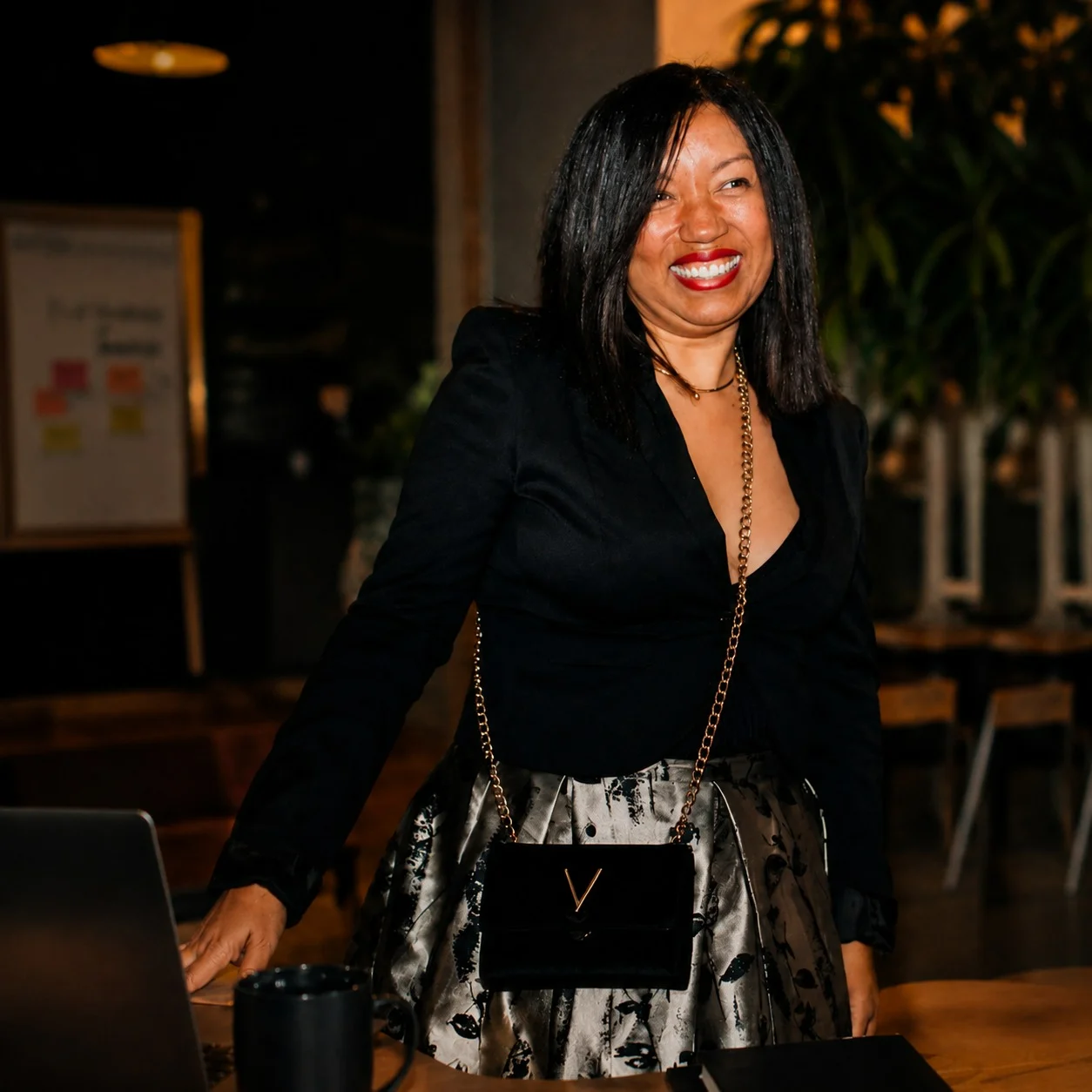
“We want to breathe SNIFR. We want to merge with SNIFR.”
— Kiara and Katja
How Do You Prove That an App Can Become a Movement?
When the team saw everything we had prepared, they were surprised.
SNIFR was very young, but we were not arriving with a blank page. We already had an advanced Web Summit Lisbon 2026 strategy, we were working on our first pilot, and we were searching for the first generation of Founders 2026.
We did not want to arrive in Lisbon with a presentation filled with promises.
We wanted to arrive with evidence. We wanted to be able to look an investor in the eye and say:
“This is not just an app with users. It is a community capable of meeting, participating, and walking together.”
That is how Primera Huella — First Footprint was born.
First Footprint would be the moment SNIFR stepped out of the phone and met people and dogs in the real world.
We did not imagine three isolated events.
We imagined one movement travelling across the city.
The first footprint will take place in Terrassa on September 27.
The second will arrive in La Garriga on October 4.
The third will take place in Sant Martí on October 11.
Three parks. One movement.
Between each gathering, there will be seven days to keep walking, discover places, participate, and see whether the experience can live beyond a single afternoon.
Because the question is not simply how many people we can bring together in a park.
The real question is:
Can we make them want to keep walking together the next day?
We also imagined Founders 2026, the first generation of people who will be able to say they were there when SNIFR began.
Before the investors.
Before the major brands.
Before Lisbon.
First Footprint is our founding experiment: a test of product, learning, and community, but also a record of the moment SNIFR left the hands of its two founders and began to belong to more people.

“We do not want to arrive in Lisbon with promises. We want to arrive with evidence.”
— The SNIFR team
What If Nobody Shows Up After Everything We Have Prepared?
At the time of writing, First Footprint has not happened yet.
We have a strategy.
We have a team that once seemed impossible for a startup like ours.
We have three parks, three dates, and one goal: to prove before Web Summit Lisbon 2026 that SNIFR can bring together something more valuable than downloads.
A community.
But we still do not know what will happen.
We do not know how many people will arrive in Terrassa on September 27.
We do not know whether the dogs will walk together, whether users will continue participating during the following seven days, or whether the movement will make it La Garriga and Sant Martí.
And that is the truth about building a startup: sometimes you have to decide, invest what you cannot spare, and convince others to walk with you without any guarantee that the result will look the way you imagined.
Web Summit forced us to think bigger.
Víctor helped us look at the dream without losing sight of reality.
Kiara and Katja chose to lend it their experience and international voice.
Dani continues turning the vision into code.
And I am trying to connect all the pieces so that SNIFR arrives in Lisbon with something true to tell.
“Now the plan has to leave the page.”
— Yngrid Salazar
The first test will be in Terrassa.
That is where we will discover whether First Footprint is merely the name of a campaign or the beginning of a movement.
This story continues on September 27, 2026.
And honestly, we do not know how it will end either.
To be continued…